What Is LiDAR, and How Is It Different From a Camera?

Your phone can measure a couch from across the room. Your robot vacuum finishes the living room with every light off. The self-driving cars in the news carry a spinning sensor on the roof. All three are solving the same problem, and the LiDAR vs camera question is really a question about which half of that problem a device needs to solve.
Here is the short version. A camera tells a device what something looks like. LiDAR tells it how far away that something is. Each one is strong exactly where the other is weak, which is why the devices that work best usually carry both.
What LiDAR Is
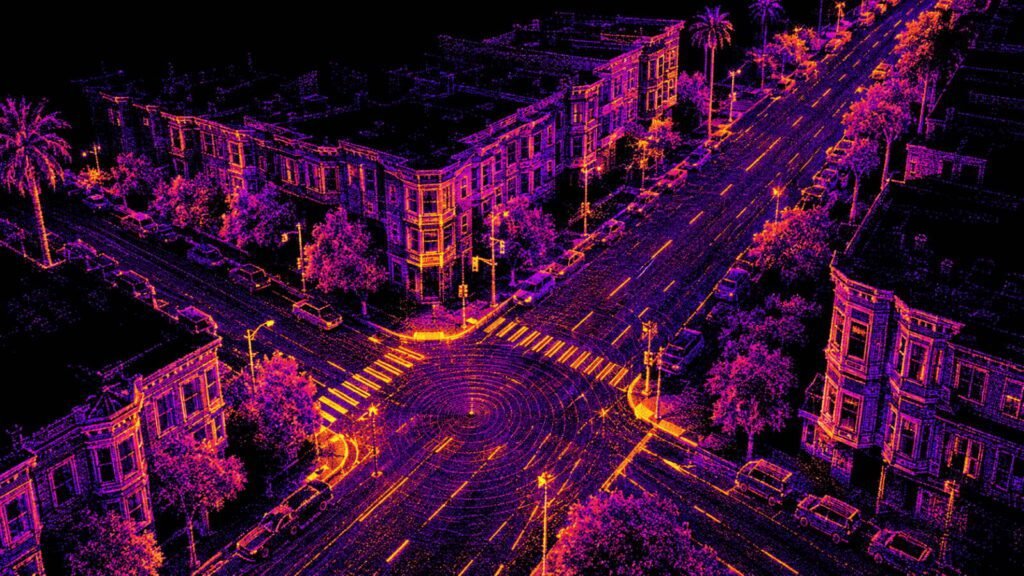
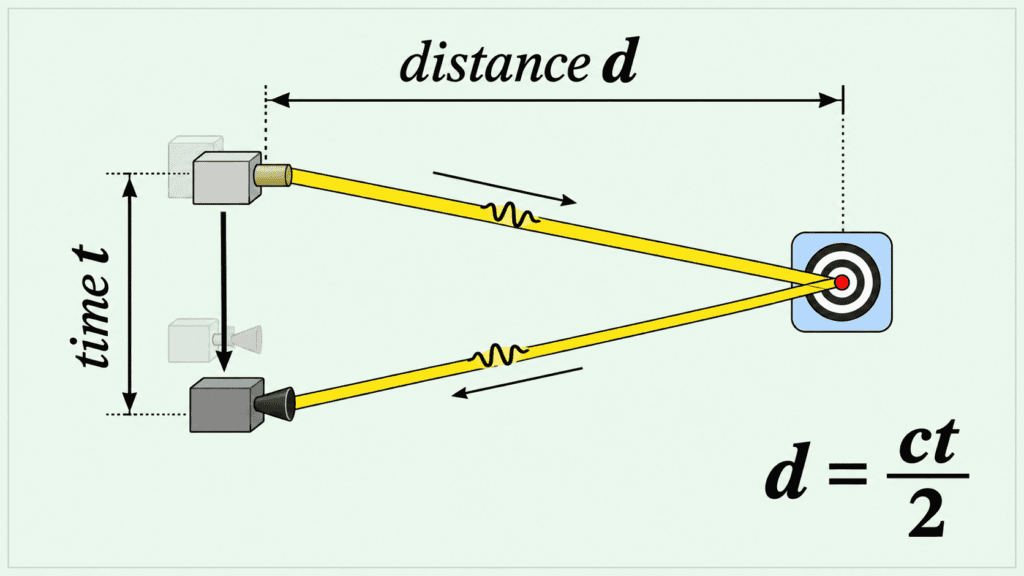
LiDAR stands for Light Detection and Ranging. NOAA describes it as a way of measuring distance with pulsed laser light. The sensor fires invisible infrared pulses, thousands of them every second, and times how long each one takes to bounce back. Light travels at a known speed, so that time converts straight into distance.
Do that across a whole room and you get a depth map: a cloud of points, each one a measured distance.
A camera works the other way around. It records light that is already in the room, which gives it color, texture and detail. What it does not record is distance. A camera has to estimate depth from the picture, the same way you judge that a car is far away because it looks small.
That is the whole difference. LiDAR measures shape. A camera sees appearance.
Where You Already Use It
Your Phone
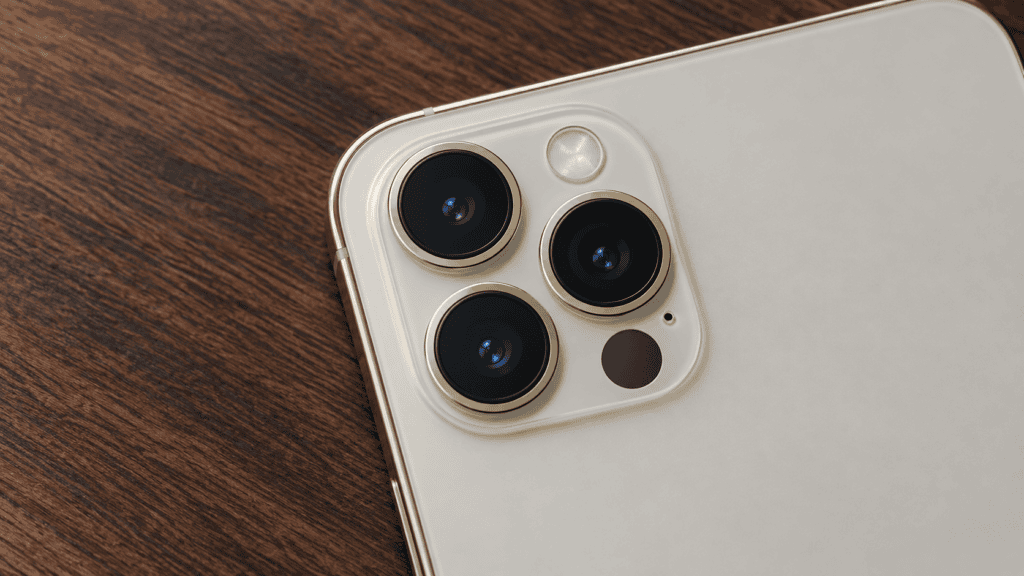
Every iPhone Pro and Pro Max since the iPhone 12 Pro carries a LiDAR scanner beside the cameras. The standard, Plus, mini and SE models do not.
You have probably used it without knowing. Apple’s Measure app guide notes that supported Pro devices show visible guides along edges and can measure someone’s height from head to floor. Room-scanning apps lean on the same sensor to sketch a floor plan.
The camera still does the job you see, the photo. LiDAR sits behind it, feeding in distance.
Robot Vacuums and Mowers
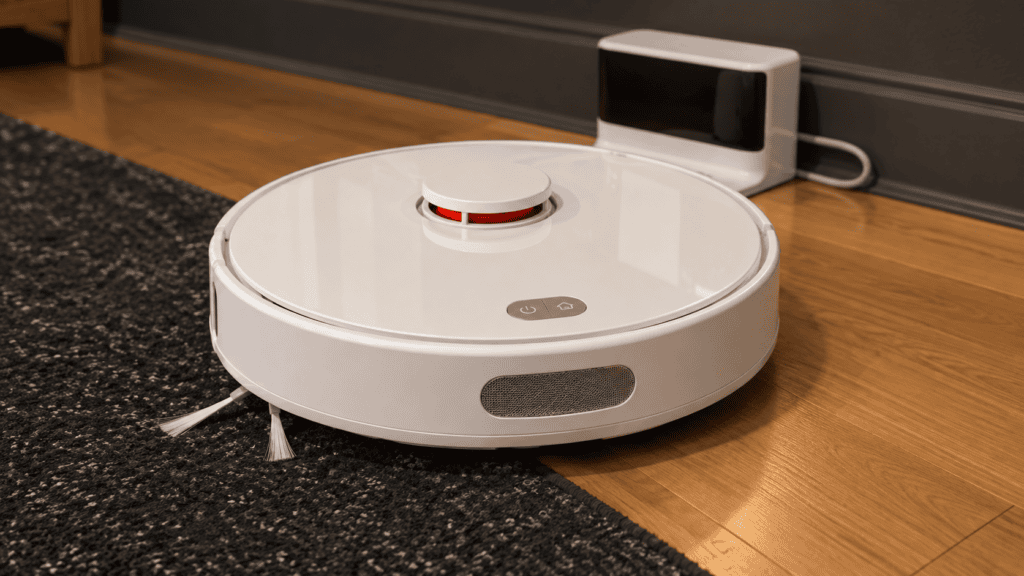
This is where the trade-off is easiest to see. A LiDAR robot vacuum maps your home with a laser, so it cleans the same way at midnight as at noon. A camera-only robot navigates by spotting landmarks such as corners and furniture edges, which means it needs light. Many carry a small headlight for that reason.
A laser map cannot tell a sock from a charging cable, though. So most newer models add a front camera just for obstacles. iRobot moved its 2025 Roomba lineup to LiDAR mapping and kept a camera for recognizing what is on the floor. Our robot vacuum and mop combo guide covers how that plays out when you are choosing one.
Cars
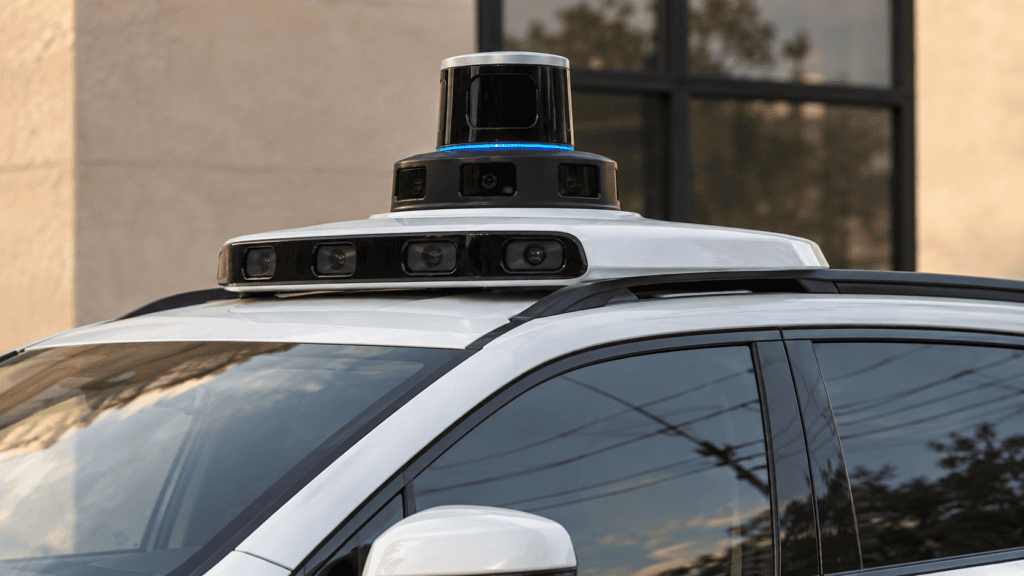
Self-driving cars are the loudest version of this debate. Waymo’s sensor setup combines LiDAR, cameras and radar, with each one covering the others’ blind spots. Tesla went the other way and relies on cameras alone. That split, and why the cost argument behind it has shifted, is laid out in the camera-only debate. It is the same trade-off, just at highway speed.
Security Cameras
Your doorbell and security cameras are cameras, not LiDAR. That explains two things you have probably noticed. They need infrared lights to see at night, because a camera has nothing to record without light. And they are good at spotting a person but poor at judging how far away that person is. Our doorbell camera guide goes further into what those cameras can and cannot do.
LiDAR vs Camera: The Trade-Offs
Darkness. LiDAR brings its own light, so a dark room makes no difference to it. A camera needs light, or an infrared helper that turns the picture black and white.
Detail. A camera can read a sign, recognize a face or tell a cat from a cushion. LiDAR sees shapes and distances only. It knows something is there, not what it is.
Privacy. A LiDAR sensor cannot capture a picture of you that anyone would recognize. A camera can. That matters most for devices that move around your home on their own. In 2020, images taken by development versions of a robot vacuum, including intimate ones, ended up online after being shared with contractors hired to label training data. The manufacturer said those were modified test units, not retail models, and the investigation into how the robot vacuum images leaked is still worth reading before you put a camera on wheels in your bedroom.
Weather and glare. Cameras struggle with direct sun glare and fog. That is one reason self-driving cars add a third sensor, radar, which uses radio waves and keeps working in rain, fog and snow.
Cost. LiDAR used to be expensive. Some sensors have fallen from tens of thousands of dollars to under a thousand over the past five years, which is why it now turns up in budget robot vacuums and not just flagship ones.
💡 Private rooms: If a device will work somewhere private, such as a bedroom or bathroom, LiDAR-only sensing is the safer choice. It records nothing a person could recognize.
What This Means When You Buy Something
Three questions sort almost any device with a sensor on it.
- Does it need to work in the dark? If yes, favor LiDAR, or at least a camera with good infrared.
- Does it need to know what an object is, or only where it is? Recognizing a pet, a person or a cable takes a camera. Avoiding a wall only takes distance.
- Would you be comfortable with it seeing the room? If not, look for LiDAR, or for a camera you can switch off in the app.
⚠️ Check it on day one: A camera-off setting only helps if you use it. Check the privacy settings the day a device arrives, not after you have forgotten it has a camera. Our voice assistant privacy guide walks through the same habit for smart speakers.
Questions People Ask
Is radar the same as LiDAR?
No. Radar uses radio waves instead of light. It is less precise, but it keeps working in rain and fog, and many presence sensors use it to tell whether someone is in a room.
Is LiDAR safe for your eyes?
Consumer LiDAR is built to the lowest-risk laser class. The FDA’s laser FAQ recommends looking for an IEC Class 1 label, which marks a product as low risk.
Does my phone have LiDAR?
On an iPhone, only the Pro and Pro Max models from the iPhone 12 Pro onward. Look for a small black circle beside the camera lenses.
Why does every device not use both?
Cost, size and power. Every sensor adds parts, battery drain and processing. A doorbell has no need to measure distance, so it skips LiDAR. A budget robot vacuum often skips the obstacle camera for the same reason.
Try It Tonight
Open the Measure app on your iPhone and point it at a doorway. If you are on a Pro model, guides will snap to the edges almost straight away. That is LiDAR at work, and once you have seen the LiDAR vs camera difference on your own phone, you will spot it in every device that claims it can see your home.