What to Monitor at Home to Catch Problems Before They Get Expensive

Most home disasters do not start as disasters. They start as a slow drip behind a washing machine, a freezer that loses power overnight, or a furnace that struggles for weeks before it quits. You find out when the damage is already done.
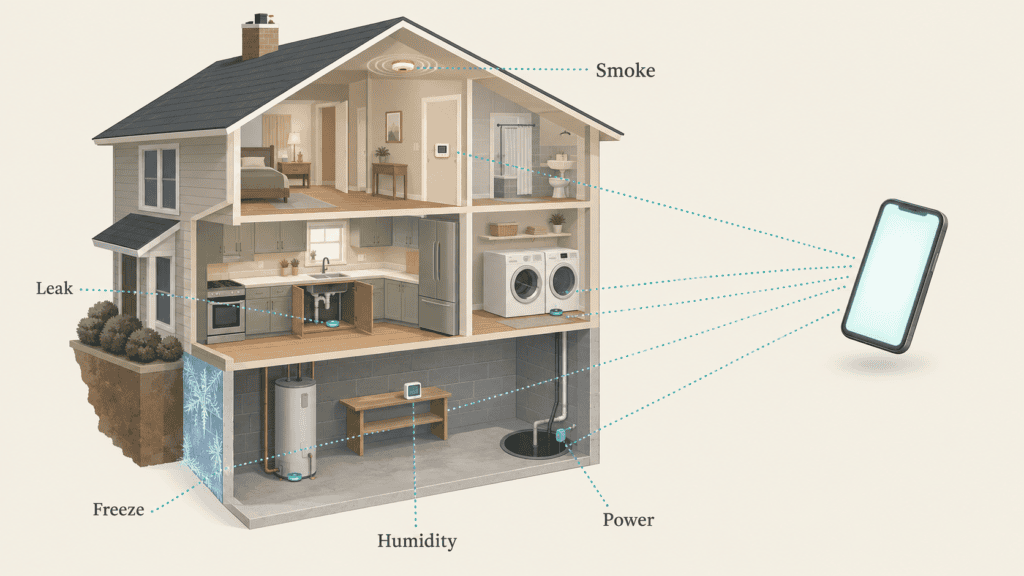
Home monitoring sensors change that. If you buy one thing from this guide, make it a water leak detector. Water does the most expensive damage in an ordinary house, and the sensor that catches it is the cheapest thing here.
Some links in this post are affiliate links. As an Amazon Associate, SmartHomeLabs earns from qualifying purchases, at no extra cost to you. We only recommend products we would benefit your home.
Walk the House First
Before buying anything, find the spots that matter. Look under every sink, behind the washing machine, beside the water heater, and around each toilet. Then check the lines people forget: the fridge ice maker, the dishwasher, and the condensate pan under the furnace or air handler. Finally, note the places you rarely enter, such as a crawl space or a garage on an exterior wall. Cold corners freeze first, damp corners grow mold first, and nobody is standing there when it starts.
Catch a Leak Before It Spreads
A slow leak under a sink can run for weeks before a warped cabinet door gives it away. A leak detector sits at the weak spot and alerts your phone the moment its probes touch water.
The GoveeLife Smart Water Leak Detector 1s is a sensible starting point. The three pack covers your first three spots, the alarm runs to 105dB, the sensors are rated IP67, and the batteries are rated for five years. The sensors talk to an included gateway rather than your WiFi, and the gateway needs a 2.4GHz network. There is no subscription.

💡 Where to put the first three: behind the washing machine, under the water heater, and at the base of the toilet you use least.
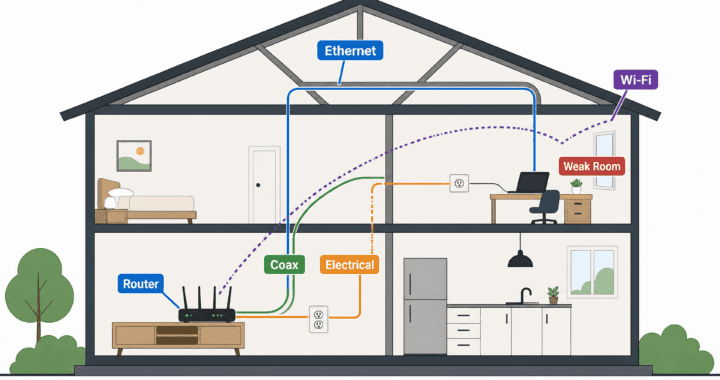
⚠️ The gateway needs strong WiFi, the sensors do not: Their long range radio reaches a crawl space, so place the gateway where your signal is solid. If no room qualifies, our guide to fixing weak WiFi in one room covers every option.
Go One Step Further With Automatic Shutoff
A sensor tells you about a leak. A shutoff valve does something about it. Plumbing and insurance sources put a burst supply hose at roughly 650 gallons an hour, the difference between a wet floor and a ruined ceiling below it.
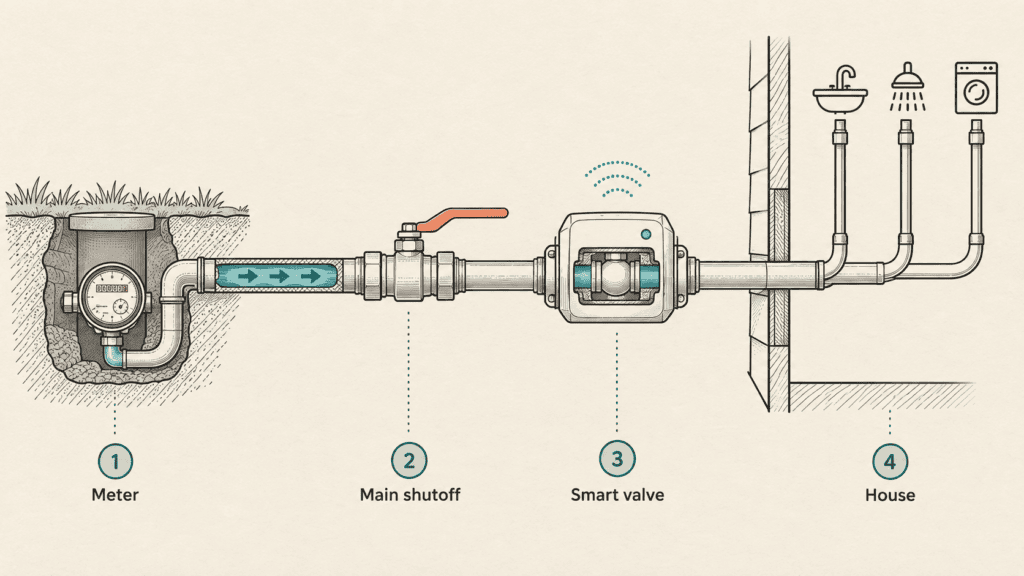
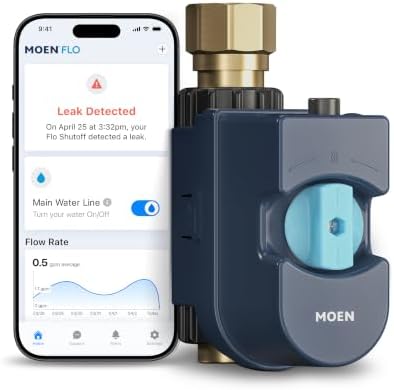
The Moen Flo Shutoff watches flow, pressure and temperature on the main and closes the valve on its own. Its daily MicroLeak test can identify a drip as slow as one drop per minute. The listing below is the 1 inch model, so check your main line size, and budget for a plumber.
Know the Moment the Power Drops
Some of the most expensive failures are silent: a sump pump that loses power during a storm, or a chest freezer that trips a breaker overnight.
The obvious idea is to put the pump on a smart plug and watch its power draw. Do not. Pump manufacturers call for a dedicated grounded outlet and rule out anything plugged in between.
⚠️ Not on a pump, a fridge, or a freezer: those go straight into their own grounded outlet, with nothing in between.
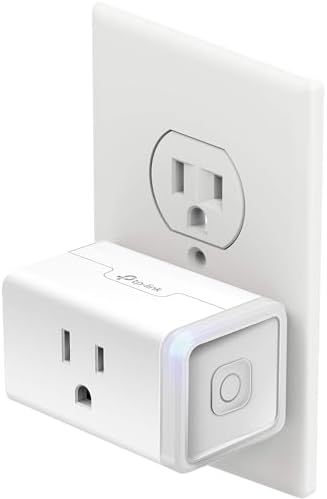
Monitor the water instead. Any high water float alarm in the pit sounds when the level rises, which tells you the pump has stopped without touching its power. Smart plugs still earn their place on lamps and space heaters, where the Kasa Smart Plug Mini KP115 reports energy use with no hub.
The wiring can warn you too. Some insurers, State Farm among them, have offered policyholders Ting, a plug-in monitor that watches for the small arcing faults that come before an electrical fire.
Spot HVAC Trouble Before It Quits
Heating systems rarely fail without warning. A filter clogs, airflow drops, and the system short cycles for weeks before anything stops. The ecobee Smart Thermostat Premium works with most 24V systems and ships with a Power Extender Kit for homes with no C-wire. Its temperature alerts matter more than its filter reminders: if the heat quits while you are away in January, you hear about it from your phone rather than from a frozen pipe.

Stay Ahead of Mold and Freeze Risk
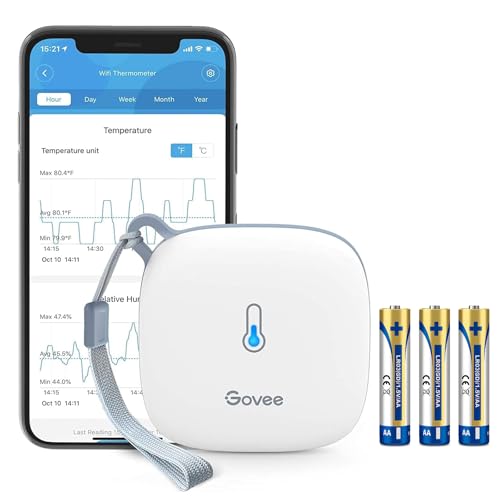
Damp basements grow mold before anyone can smell it, and the same cold corners are where pipes freeze. The Govee WiFi Thermometer Hygrometer H5179 tracks temperature and humidity and alerts your phone when either crosses a threshold you set. Put one in the basement and one on the coldest exterior wall, within reach of your WiFi.
💡 Start the freeze alert at 50°F: Room air reads warmer than a pipe inside an exterior wall, and the margin buys you hours rather than minutes.
The Alarm That Is Not Optional
Every other device here protects property. This one protects people. The First Alert SC5 covers smoke and carbon monoxide in one unit and sends the alert to your phone as well as the hallway. The listing below is the battery version, so there is no wiring. Carbon monoxide has no smell, it can come from a struggling furnace or a car in an attached garage, and a phone alert reaches you when family or pets are home without you.

What Each One Watches
| Device | What It Catches Early |
|---|---|
| Water leak detector | Slow leaks under sinks and appliances |
| Automatic shutoff valve | A burst line while nobody is home |
| High water float alarm | A sump pump that has stopped keeping up |
| Smart thermostat | Clogged filters, short cycling, heat loss |
| Temperature and humidity monitor | Mold risk and freeze risk in cold corners |
| Smoke and CO alarm | Fire and carbon monoxide |
What Home Monitoring Sensors Cannot Do
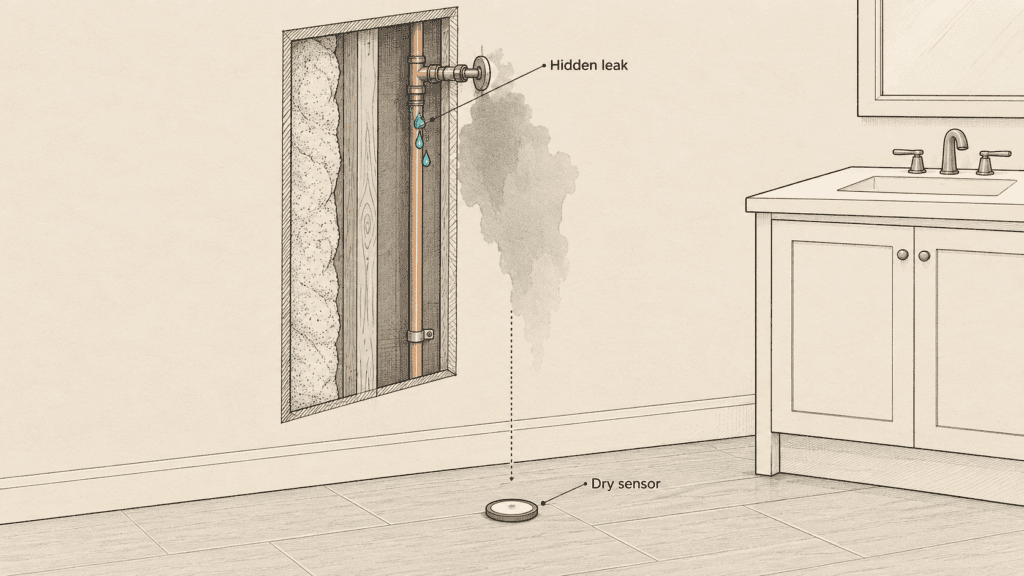
A floor sensor only knows about water once it reaches the floor. A pipe weeping inside a wall can soak drywall for days first, which is the gap a shutoff valve closes. No sensor prevents a freeze either. It warns you, and someone still has to turn up the heat.
Every alert also depends on a battery, a powered gateway, and an internet connection. Once a month, drip water on each probe and confirm the alert arrives. A sensor you have never checked is a guess.
Where to Start in Your House
Renting. Leak detectors and a battery smoke and CO alarm. Neither touches the building, and both leave with you.
An older house with a basement. A float alarm in the sump pit and a humidity monitor in the driest looking corner, which is rarely as dry as it looks.
Away often, or a second home. A shutoff valve and a temperature monitor, so a burst line closes itself and a failed furnace reaches your phone before the pipes freeze.
Frequently Asked Questions
Do these need a monthly subscription?
None of the picks here require one for the alerts that matter. Our breakdown of what smart home subscriptions really cost covers which fees are worth paying.
Will these lower my home insurance?
Possibly. Several insurers credit leak sensors or automatic shutoff valves, and some supply the device itself. Call your insurer before you buy.
What happens when the internet goes down?
Local alarms still sound, because they need no connection to make noise. You lose the phone alert, which is the part you need when nobody is home.
Which one should I buy first?
A leak detector, in almost every house. The shutoff valve is the upgrade once you know your weak spots.
The Bottom Line
Start with water, because water is where the money goes. Add temperature where the house gets cold and humidity where it stays damp, then test each sensor monthly. Home monitoring sensors handle the early warning. For the upkeep side of the same job, our guide to the best tech for a fresh, tidy home picks up where this one stops.